Tensile Membrane Material Selection Guide
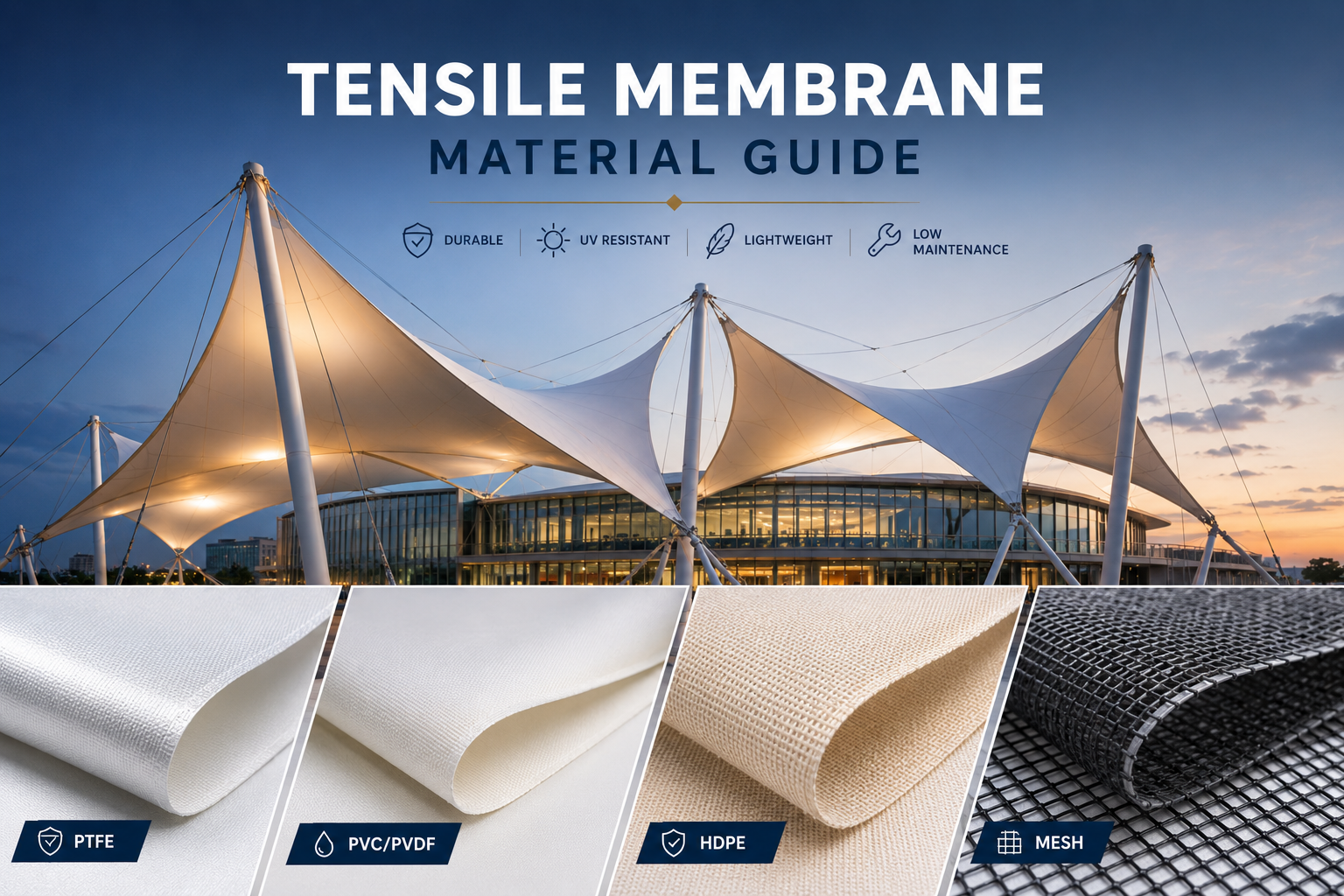
Tensile Membrane Material Selection Guide
The Definitive Tensile Membrane Material Selection Guide: PTFE, PVC/PVDF, HDPE, and Mesh Compared
Selecting the right membrane material is one of the most important decisions during the design and specification of a tensile structure. Material choice directly affects structural performance, service life, maintenance requirements, aesthetics, and lifecycle costs. According to the European Design Guide for Tensile Surface Structures, selecting membrane materials based on structural, environmental, and functional requirements is fundamental to the long-term performance of tensile structures. This makes material selection a fundamental part of every successful tensile project.
This guide compares PTFE, PVC/PVDF, HDPE, and Mesh materials, explaining where each performs best and what engineers, specification writers, and procurement professionals should consider before making a final decision.
Why Material Selection Matters
Every tensile structure has different functional and environmental requirements. A stadium roof, for example, demands different performance characteristics than a school shade structure or a commercial car park canopy.
When evaluating tensile material specifications, the following factors should be considered:
- Expected service life
- Fire performance
- Weather resistance
- Structural strength
- Light transmission
- Maintenance requirements
- Project budget
- Installation complexity
Rather than searching for a universally "best" material, the objective is to identify the most suitable option for the intended application.
Material Comparison
| Project Requirement | Recommended Material |
|---|---|
| Permanent civic landmark | PTFE |
| Commercial waterproof canopy | PVC/PVDF |
| Outdoor shade structure | HDPE |
| Ventilated façade or screen | Mesh |
| Complex architectural forms | PVC/PVDF |
| Longest service life | PTFE |
| Maximum airflow | Mesh |
| Budget-friendly shade | HDPE |
PTFE: Premium Material for Permanent Structures
For projects where longevity and performance outweigh initial cost, PTFE remains the benchmark material within the tensile architecture industry.
Manufactured using a woven fibreglass substrate coated with fluoropolymer resin, it offers outstanding resistance to ultraviolet radiation, pollution, chemicals, and harsh environmental conditions.
Key characteristics
- Design life exceeding 25–30 years
- Class A non-combustible fire rating
- Approximately 10–20% diffused light transmission
- Excellent self-cleaning properties
- Exceptional resistance to weathering
Its ability to maintain structural integrity with minimal maintenance makes PTFE particularly suitable for airports, transportation hubs, sports stadiums, exhibition centres, and landmark civic developments.
The primary limitation is cost. Material pricing, specialised fabrication, and installation requirements are considerably higher than alternative membrane systems. In addition, the fibreglass base provides high strength but requires careful handling during installation due to its relatively brittle nature.
PVC/PVDF: The Most Versatile Commercial Solution
For many commercial projects, PVC/PVDF provides the best balance between performance, fabrication flexibility, and overall project cost.
The material combines a woven polyester fabric with a PVC coating, while a PVDF surface finish improves resistance against dirt accumulation and UV degradation.
Typical applications include:
- Commercial car parks
- Walkway canopies
- Retail developments
- Amphitheatres
- Temporary and semi-permanent event structures
A standard PVC membrane generally offers a service life of 10–15 years, while PVC/PVDF systems with a high-quality top coating can perform for 15–20 years under suitable maintenance programmes.
Its flexibility allows fabricators to produce complex curved forms with relative ease, making it one of the most adaptable membrane systems available. Multiple colour options also provide greater architectural freedom compared with many premium materials.
Although durable, prolonged UV exposure eventually affects coating performance, making periodic inspection and maintenance important throughout its operational life.
HDPE: The Practical Choice for Shade Structures
Unlike waterproof membrane systems, HDPE is specifically designed to provide shade and ventilation rather than weather protection. Manufactured as a knitted or woven polyethene fabric, it blocks a significant proportion of harmful ultraviolet radiation while allowing continuous airflow through the structure.
Typical applications include:
- School playgrounds
- Public parks
- Sports facilities
- Agricultural installations
- Outdoor recreational areas
The greatest advantage of HDPE lies in its ability to reduce heat build-up beneath the canopy. Since warm air escapes through the open weave, shaded spaces remain noticeably cooler than those covered by impermeable materials.
Additional benefits include:
- Resistance to mildew and rot
- Good tear resistance
- Competitive installation costs
- Minimal maintenance requirements
However, because the fabric is intentionally porous, it should not be selected where waterproof performance is required. It functions purely as a shading solution rather than a rain barrier.
Mesh: Ventilation with Architectural Appeal
Mesh materials prioritise airflow, transparency, and façade performance over complete environmental enclosure.
Depending on project requirements, these systems may use PVC-coated polyester mesh or advanced ePTFE-based products to achieve different levels of openness and visibility.
Common applications include:
- Building facades
- Parking garage screens
- Stadium wraps
- Decorative building envelopes
- Ventilated architectural screens
One of the greatest strengths of mesh systems is their ability to reduce solar heat gain while maintaining outward visibility and natural ventilation. Because of their porous construction, mesh materials provide only limited protection against rain and direct sunlight. Their primary purpose is environmental moderation rather than complete enclosure.
Key Factors to Consider Before Selecting a Material
Every project should evaluate material performance against operational requirements rather than focusing solely on purchase price.
Expected lifespan
Long-term public infrastructure generally justifies premium materials with extended service lives, while commercial projects may prioritise lower upfront investment.
Fire safety requirements
Building regulations often dictate minimum fire performance standards. Early coordination with local codes helps prevent costly redesigns during specification.
Environmental exposure
High UV exposure, pollution, coastal environments, and chemical contaminants all influence membrane durability and should be assessed during design.
Lighting objectives
Some projects benefit from translucent fabrics that introduce soft natural daylight, while others require maximum shading or visual screening.
Thermal performance
The Solar Reflectance Index (SRI) of the selected material can influence roof temperatures and overall building energy performance, particularly in warmer climates.
Which Material Fits Your Project?
The following recommendations provide a practical starting point during architectural fabric selection:
| Property | PTFE | PVC/PVDF | HDPE | Mesh |
|---|---|---|---|---|
| Typical Design Life | 25–30+ years | 10–20 years | 8–12 years | 10–20 years |
| Waterproof | Yes | Yes | No | Partial |
| Fire Performance | Class A Non-Combustible | B1 Flame Retardant | Requires treatment | Depends on coating |
| Light Performance | Diffused daylight | Moderate light transmission | Shade only | Variable transparency |
| Maintenance | Very Low | Moderate | Low | Low |
| Typical Applications | Stadiums, airports, civic buildings | Car parks, walkways, amphitheatres | Shade sails, playgrounds | Facades, screens, stadium wraps |
Conclusion
No single membrane material is suitable for every tensile structure. The correct decision depends on project objectives, environmental conditions, expected lifespan, maintenance strategy, regulatory requirements, and budget. Premium projects seeking decades of performance often benefit from PTFE, while commercial developments frequently achieve the best balance through PVC/PVDF. Shade-focused installations typically favour HDPE, whereas ventilated building envelopes perform exceptionally well with Mesh solutions.
At CForce, we have specified PTFE, PVC/PVDF, HDPE, and mesh systems across commercial canopies, transport infrastructure, public spaces, and industrial projects. This practical experience helps us recommend membrane systems based on long-term performance rather than material specifications alone.
Contact our engineers at CForce to discuss your design goals and receive expert guidance backed by industry experience.
Frequently Asked Questions
Which tensile membrane material lasts the longest?
PTFE generally offers the longest service life, with many properly maintained installations exceeding 25 to 30 years.
Is PVC/PVDF suitable for permanent commercial buildings?
Yes. PVC/PVDF is widely specified for permanent commercial structures such as car parks, walkways, retail developments, and public gathering spaces because it balances durability, flexibility, and cost.
Can HDPE protect against rain?
No. HDPE is designed for shade and ventilation rather than waterproofing. Its porous construction allows airflow but also permits rain to pass through.
When should architectural mesh be selected instead of solid membranes?
Mesh is typically chosen for façades, parking structures, and architectural screening applications where ventilation, visibility, and reduced solar heat gain are more important than complete weather protection.
What should engineers prioritise when selecting a tensile membrane material?
The decision should consider structural performance, expected lifespan, environmental exposure, fire requirements, maintenance expectations, project budget, and the intended function of the finished structure rather than material cost alone.
